
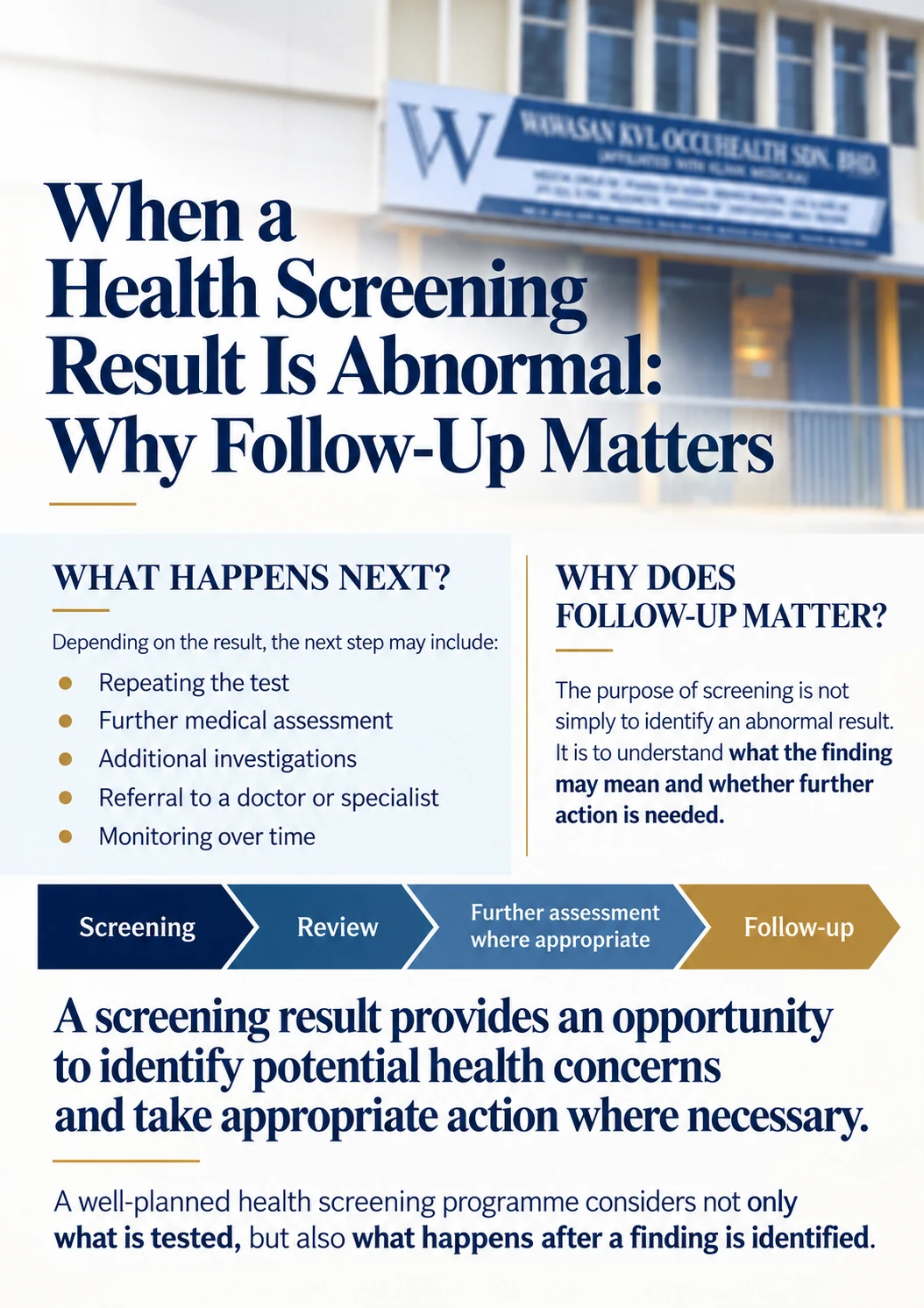
When a Health Screening Result Is Abnormal: Why Follow-Up Matters
Health screening helps identify potential health concerns, including conditions that may not yet cause noticeable symptoms. Depending on the individual’s needs, screening may include blood pressure measurement, blood tests and other assessments to evaluate specific aspects of health.
What Does an Abnormal Screening Result Mean?
An abnormal result indicates that a finding falls outside the expected range or meets a criterion that requires further attention. It does not necessarily mean that a person has a disease. Results must be interpreted in the context of the test performed, the individual’s medical history and other relevant clinical findings.
Why Is Follow-Up Important?
Follow-up helps establish the clinical significance of an abnormal result and whether further medical attention is needed. It also provides an opportunity to identify relevant risk factors, clarify uncertainties and support appropriate decisions about ongoing healthcare.
What Should Happen Next?
The recommended next step depends on the result and the individual’s circumstances. A healthcare professional may advise repeat testing, further investigations, a medical consultation or monitoring over time. Any recommended follow-up should be completed within the timeframe advised by the healthcare professional.
The Takeaway
Health screening is most useful when abnormal findings are reviewed appropriately. Understanding a result, rather than viewing it in isolation, helps guide the next steps in maintaining health and addressing potential concerns.