
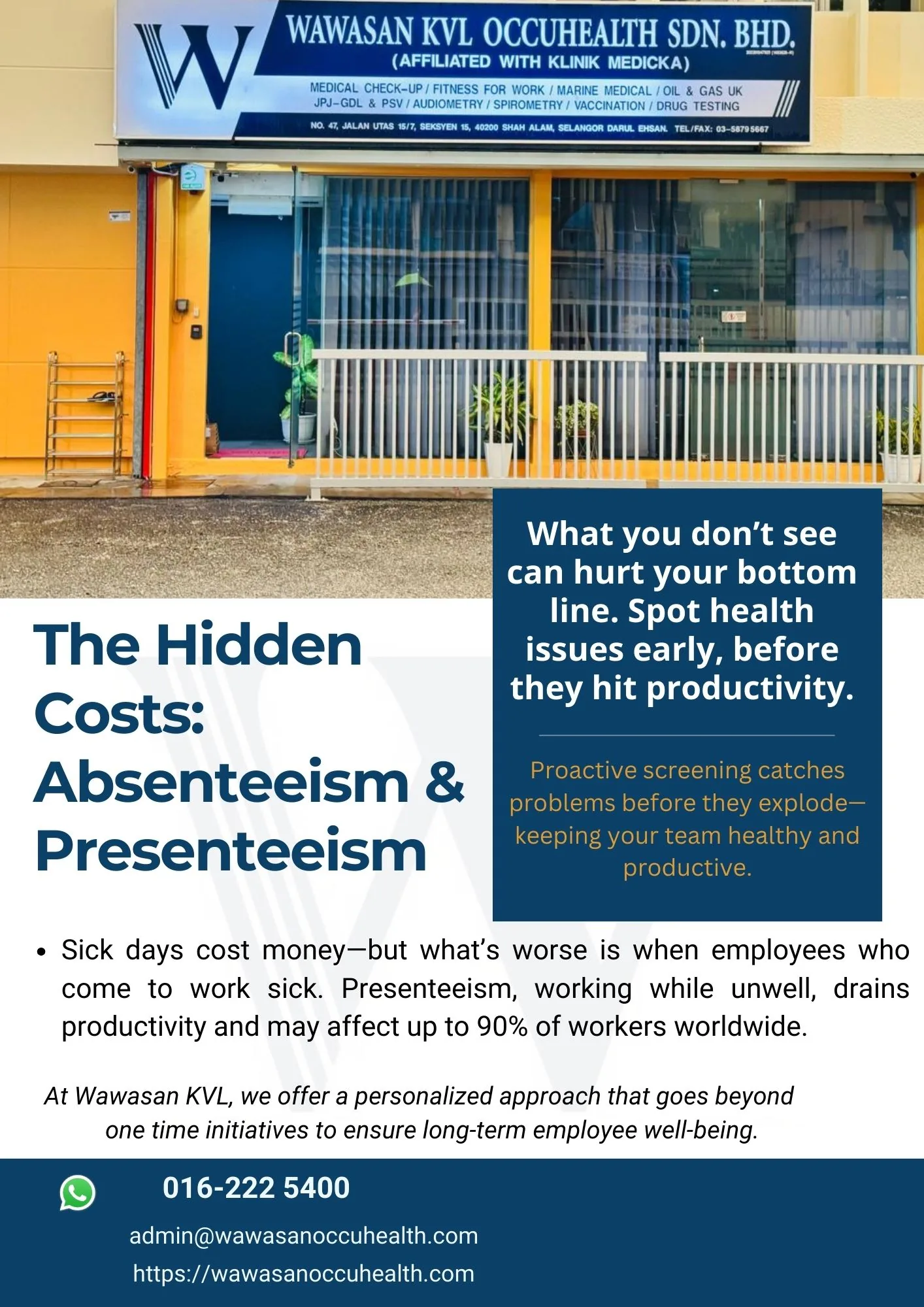
The Hidden Costs of Absenteeism and Presenteeism
Employee attendance and work performance are important to workplace health and productivity. While absenteeism is visible when an employee is away from work, another issue can be less obvious: presenteeism.
Understanding both can help employers take a balanced approach to employee health, work ability and workplace performance.
What is absenteeism?
Absenteeism refers to an employee being absent from work. It may occur for various reasons, including illness, injury, personal circumstances or other factors.
What is presenteeism?
Presenteeism refers to being present at work but functioning below normal capacity, which may affect productivity, concentration, decision-making or work performance. Health problems are one important contributor to presenteeism.
Evidence has shown a relationship between employee health and limitations in work performance.
This does not mean every performance issue is caused by a health condition. Workplace factors, job demands and organisational conditions can also influence attendance and performance. Psychosocial risks may include excessive workload, long or unsocial working hours, limited job control, unclear roles and poor organisational support.
Why does presenteeism matter?
Presenteeism can be difficult to identify because the employee is physically at work. Reduced concentration, slower decision-making, reduced work capacity or declining work quality may not be immediately recognised as a workplace health issue.
This is particularly relevant in safety-sensitive work, where reduced functional capacity may have implications beyond individual productivity.
What can employers do?
A practical occupational health approach includes:
- Identifying health issues that may affect work ability
- Encouraging appropriate medical assessment
- Supporting early intervention
- Considering suitable workplace adjustments where appropriate
- Managing psychosocial and other workplace health risks
- Supporting safe and sustainable return to work
Workplace health should not focus solely on reducing sick leave. Employers should also consider whether workers are able to perform their duties safely and effectively. Where there are concerns about an employee’s ability to safely perform specific duties, a Fitness for Work Assessment may be appropriate.
The ILO recommends addressing psychosocial risks through workplace risk assessment and preventive and control measures, alongside organisational and individual approaches.
Key takeaway
Being present at work does not always mean an employee is able to perform their work effectively or safely.
Understanding both absenteeism and presenteeism gives employers a more complete view of how health and workplace factors can affect attendance and work performance.
A sound occupational health approach considers the worker, the job and the workplace together — supporting healthier employees while maintaining safe and effective work.