
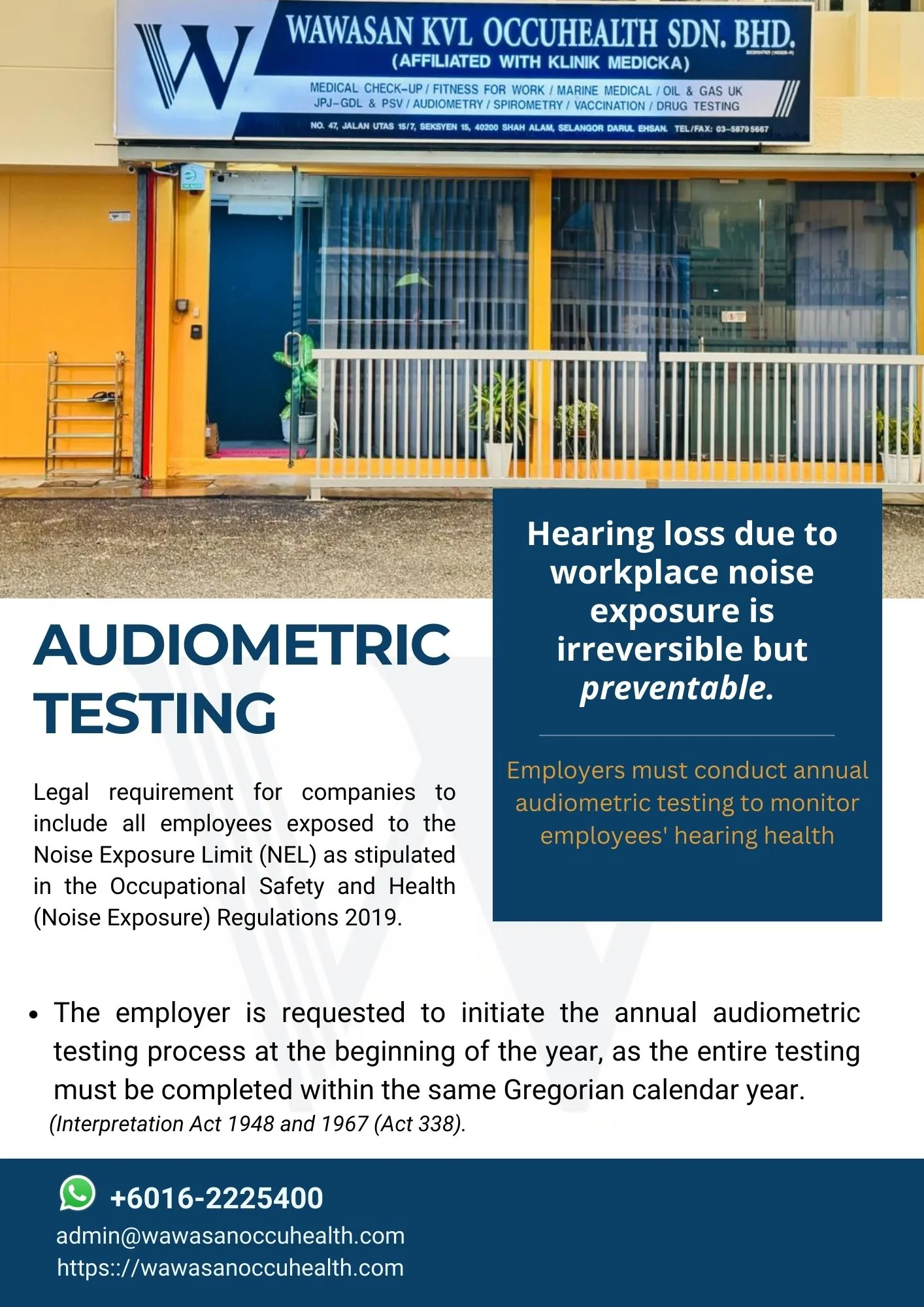
Audiometric Testing for Workplace Noise Exposure
Prolonged exposure to excessive workplace noise can cause occupational noise-related hearing disorders. The damage can be permanent, but effective noise control and hearing conservation can help prevent it.
Under Malaysia’s Occupational Safety and Health (Noise Exposure) Regulations 2019, employers must arrange annual audiometric testing for employees whose noise risk assessment shows exposure above the applicable Noise Exposure Limits (NEL).
Who needs audiometric testing?
Audiometric testing applies to workers identified through the workplace noise risk assessment as being exposed to excessive noise above the NEL.
DOSH guidance identifies excessive noise based on factors including daily noise exposure, personal noise dose and maximum or peak sound pressure levels.
Why is annual testing important?
Regular audiometric testing helps to:
- Monitor workers’ hearing over time
- Establish a baseline hearing level
- Identify changes in hearing early
- Support investigation of possible occupational noise-related hearing disorders
- Form part of the workplace Hearing Conservation Programme
DOSH guidance also states that workers exposed above the NEL should have a baseline audiogram within three months of starting work in an area with excessive noise exposure.
Annual audiometric testing must be completed within the same Gregorian calendar year. Employers should therefore start the testing process early to ensure all required employees are tested within the year.
Testing must be done properly
Audiometric testing under the Noise Exposure Regulations must be conducted through an audiometric testing centre approved by DOSH. Workers should also have been in quiet conditions for at least 14 hours without hearing protection before testing.
Important for employers
Annual audiometric testing is not simply a yearly hearing check. It forms part of a broader approach to managing occupational noise exposure, together with noise risk assessment, noise controls, hearing protection, worker training and follow-up where hearing changes are identified.
Protecting hearing starts with controlling noise exposure — and monitoring workers’ hearing helps identify problems early.