
Protecting Employee Health and Safety During Haze
Haze preparedness is an important part of workplace health and safety for employers in Malaysia.
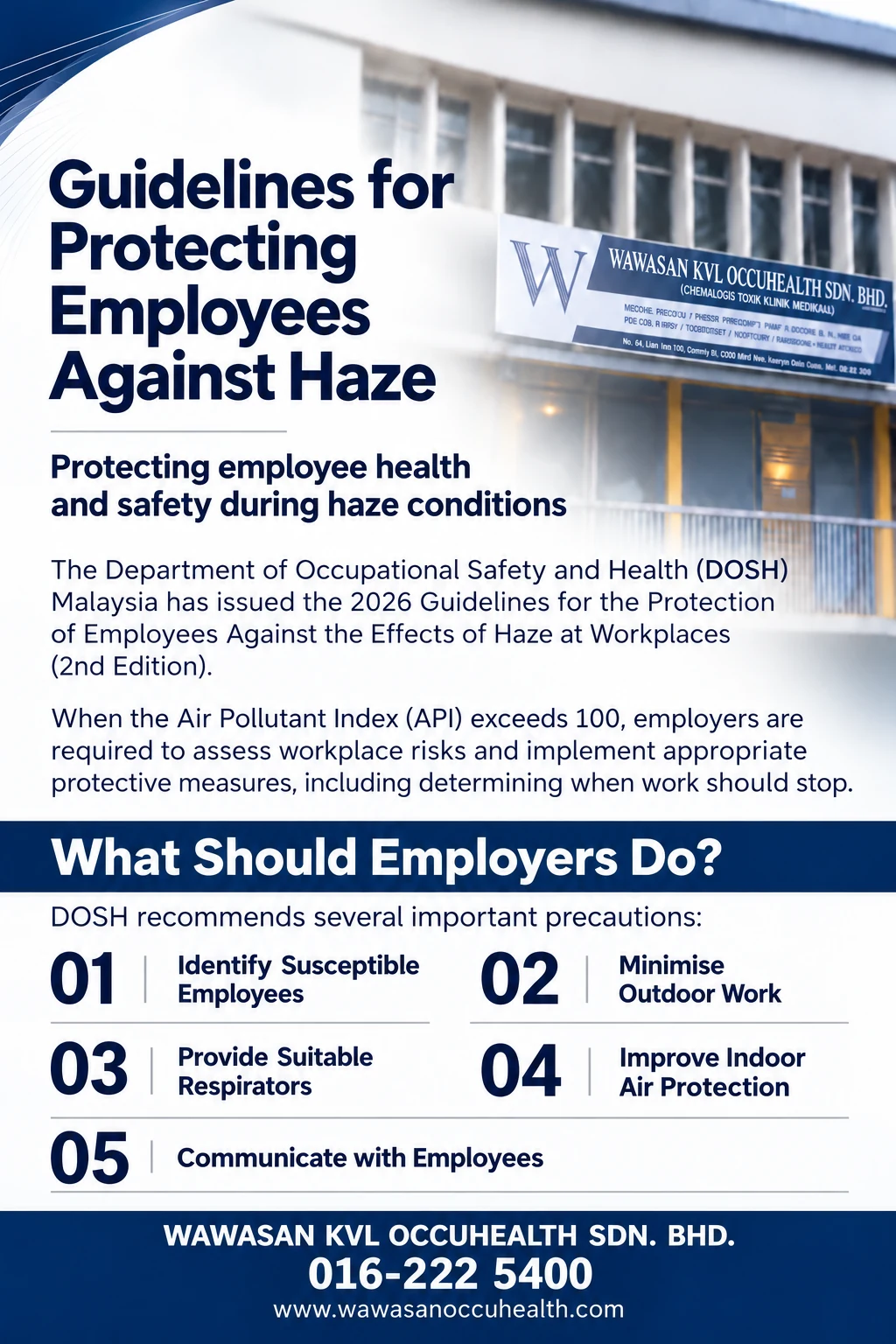
The Department of Occupational Safety and Health (DOSH) Malaysia has issued the 2026 Guidelines for the Protection of Employees Against the Effects of Haze at Workplaces (2nd Edition).
When the Air Pollutant Index (API) exceeds 100, employers are required to assess workplace risks and implement appropriate protective measures, including determining when work should stop. This does not mean that all work must automatically stop once the API exceeds 100.
What Should Employers Do?
DOSH recommends several important precautions to protect employees during haze conditions.
1. Identify Susceptible Employees
Employees with existing heart or respiratory illnesses are more vulnerable to haze. Appropriate protective measures and indoor work arrangements should be considered according to API levels.
When the API exceeds 100, susceptible employees working outdoors must use suitable respirators. If they experience breathing difficulty while wearing respirators during outdoor work, employers should assign them indoor work where pollutant levels are lower.
When the API exceeds 200, susceptible employees should be assigned indoor work, preferably involving tasks that are not physically strenuous.
2. Minimise Outdoor Work
Review outdoor activities, particularly those involving strenuous physical work, and establish criteria for stopping work when necessary.
Strenuous outdoor work should be minimised when the API exceeds 100 and avoided when the API exceeds 200.
3. Provide Suitable Respirators
Employers should provide suitable respirators when required, ensure proper fit testing and train employees on correct usage.
Preparation should include sufficient supplies of respirators and appropriate supervision to support correct use.
4. Improve Indoor Air Protection
Reduce haze entering workplaces by keeping doors and windows closed most of the time and using suitable air-cleaning devices.
Indoor air protection should be considered alongside outdoor work arrangements and other workplace precautions.
5. Communicate with Employees
Keep employees informed about haze-related precautions and establish channels for reporting adverse health effects.
Employees should understand the protective measures in place, changes to their work arrangements and how to report concerns.
Workplace Preparedness Starts Before Haze Worsens
Protecting employees during haze starts with workplace preparedness, effective communication and appropriate preventive measures.
Employers Malaysia can use the DOSH guidelines to review their workplace haze arrangements and identify areas requiring attention.