
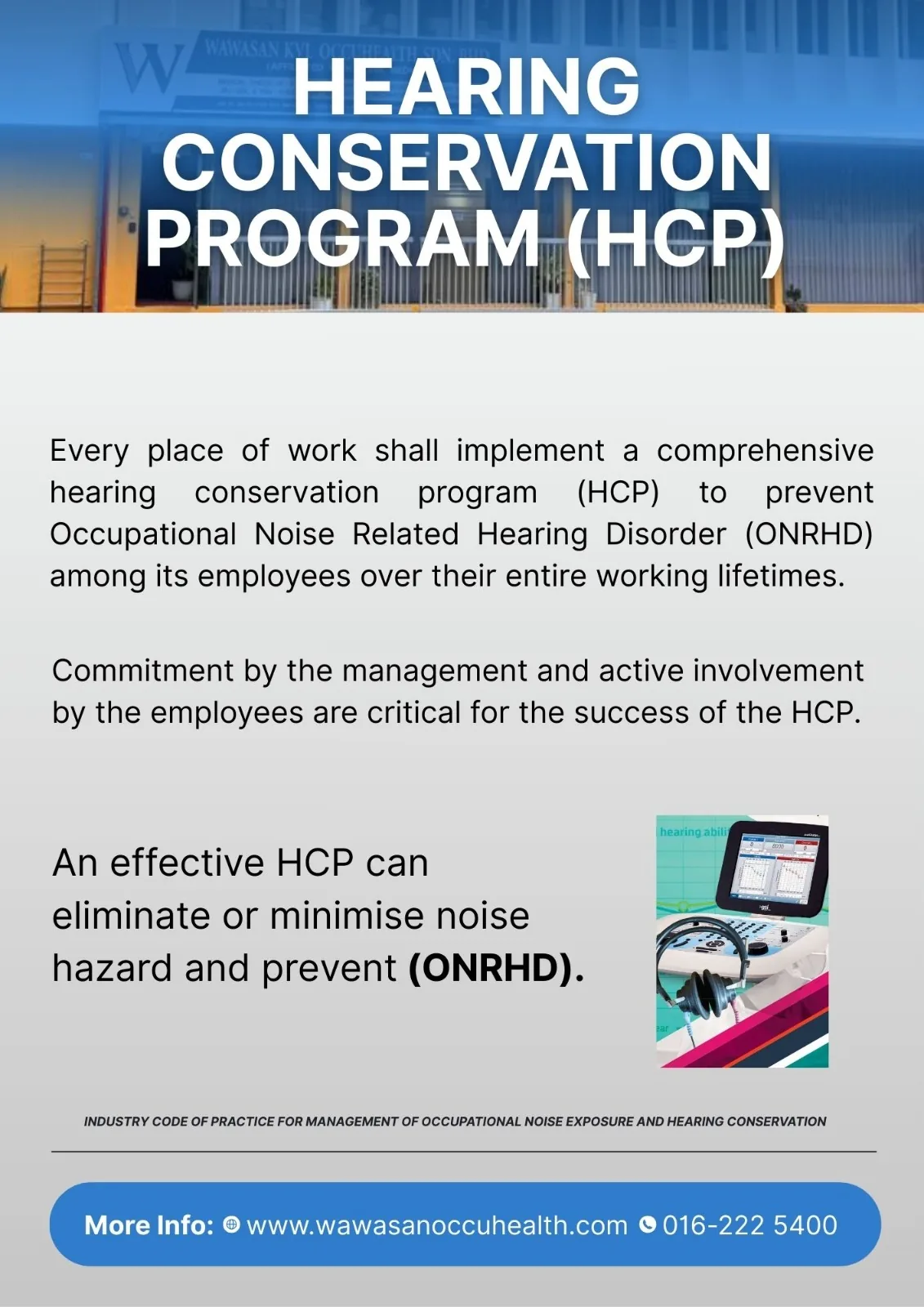
Hearing Conservation Program (HCP): Protecting Workers from Occupational Noise
Workplace noise exposure can have a lasting impact on employees’ hearing. In Malaysia, employers have responsibilities to manage excessive occupational noise exposure and implement appropriate measures to prevent Occupational Noise-Related Hearing Disorders (ONRHD).
The Industry Code of Practice for Management of Occupational Noise Exposure and Hearing Conservation 2019 provides guidance on implementing a comprehensive Hearing Conservation Program (HCP) to prevent ONRHD among employees.
What is a Hearing Conservation Program?
A Hearing Conservation Program is a structured workplace programme designed to minimise the risks associated with excessive noise exposure and prevent occupational hearing disorders.
An effective HCP is not limited to audiometric testing. It involves several elements working together, including noise risk assessment, noise control measures, audiometric testing, information and training, and recordkeeping.
Why is a Hearing Conservation Program Important?
Occupational noise-related hearing disorders can be permanent and irreversible. A comprehensive hearing conservation programme helps employers identify noise hazards, reduce exposure and monitor employees who may be at risk.
Management commitment and employee participation are also important to the success of an HCP. DOSH guidance specifically highlights the need for active involvement from both management and workers.
Key Components of an HCP
1. Noise Risk Assessment
The first step is identifying workplaces and tasks where employees may be exposed to excessive noise. The findings of the noise risk assessment help determine appropriate control measures and identify employees who may require audiometric testing.
2. Noise Control Measures
Noise should be controlled using appropriate measures based on the identified risks. These may include engineering controls, administrative controls and suitable personal hearing protection. DOSH’s 2024 Guidance on Occupational Noise Control places particular emphasis on engineering controls to achieve sustainable noise reduction.
3. Audiometric Testing
Audiometric testing is an important component of hearing conservation because it helps detect changes in employees’ hearing.
Under Malaysia’s Occupational Safety and Health (Noise Exposure) Regulations 2019, where a noise risk assessment identifies employees exposed to excessive noise above the applicable limits, employers are required to arrange annual audiometric testing through an audiometric testing centre approved by the Director General.
4. Information, Training and Awareness
Employees should understand the risks associated with occupational noise exposure, the purpose of hearing conservation and audiometric testing, and the correct selection and use of personal hearing protection.
5. Recordkeeping and Programme Review
Appropriate records should be maintained as part of the HCP, and the programme should be reviewed to assess its effectiveness and identify areas for improvement. DOSH’s ICOP 2019 states that the HCP should be reviewed annually.
Audiometry and Hearing Conservation in the Workplace
Audiometry should therefore be viewed as one part of a broader hearing conservation programme, rather than as a standalone activity.
For employers, an effective programme brings together noise risk assessment, workplace noise controls, audiometric testing, employee education, hearing protection and appropriate recordkeeping.
At Wawasan KVL Occuhealth in Shah Alam, we provide workplace audiometry testing services to support employers in their occupational hearing conservation programmes and workplace noise management.