When Bad Lifting Becomes a Serious Injury
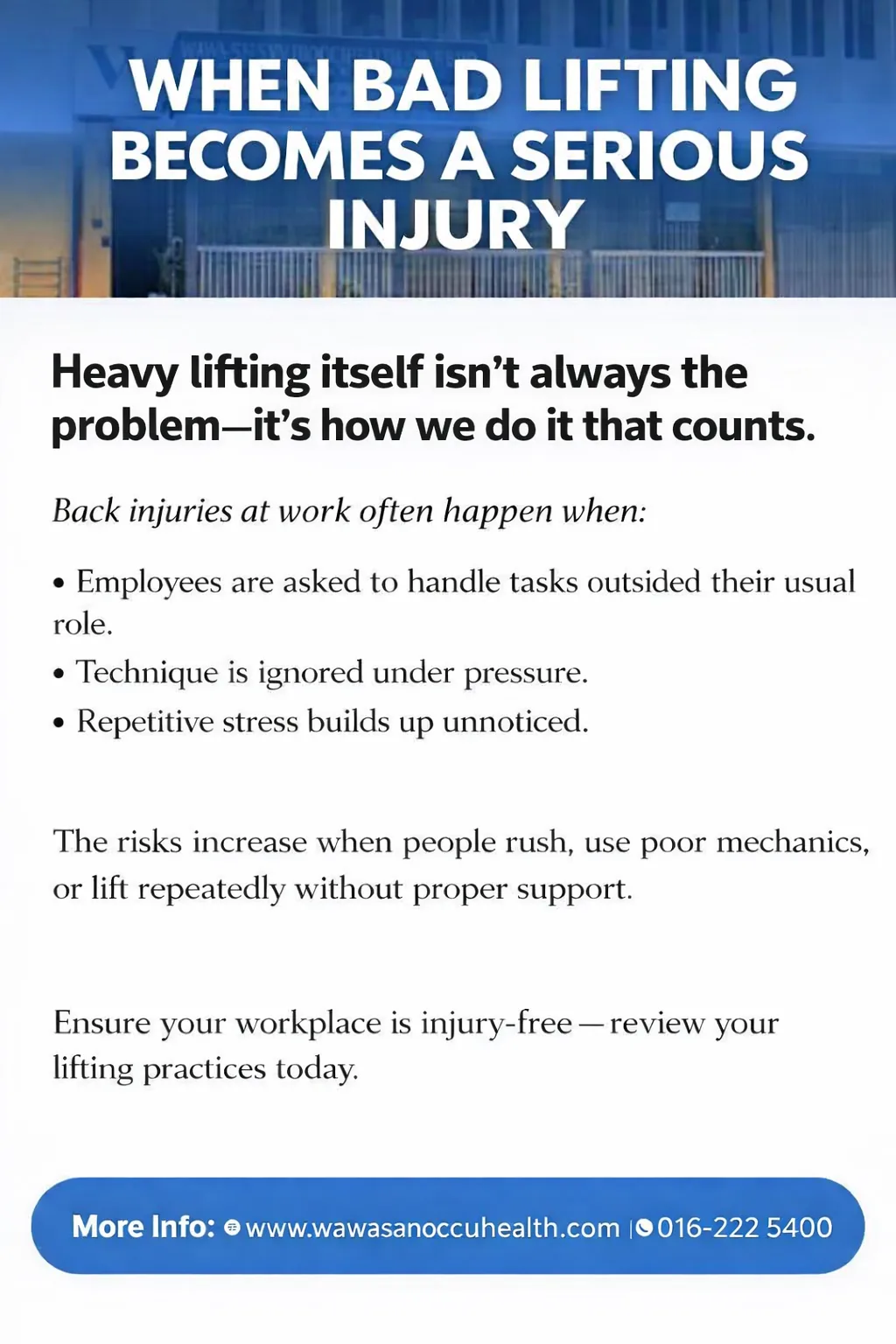
Heavy lifting itself is not always the only concern. How a task is performed, how often it is repeated, the posture involved and the workplace setup can all influence the risk of musculoskeletal injury.
Back injuries and other musculoskeletal problems can occur when manual handling tasks place excessive or repeated physical demands on workers.
Back Injuries at Work Can Occur When:
- Employees are required to perform unfamiliar or physically demanding manual handling tasks.
- Poor lifting techniques or awkward postures are used.
- Repetitive handling tasks are performed over prolonged periods.
- Workers need to bend, twist, reach or work in restricted spaces while handling loads.
- Work is performed under time pressure or with inadequate task planning.
What Can Employers Do?
- Train employees on appropriate manual handling techniques.
- Identify high-risk tasks before assigning or undertaking them.
- Use mechanical aids where appropriate to reduce manual handling.
- Review task rotation and work organisation where repetitive handling is involved.
- Assess the workplace setup to minimise awkward postures, excessive reaching and unnecessary lifting.
- Select control measures based on the nature of the task and the risks identified through workplace assessment.
Why Does It Matter?
Manual handling risks identified early can be addressed through changes to work methods, equipment, workplace layout and task organisation.
Reducing unnecessary physical strain can help protect employees from work-related musculoskeletal injuries and support safer working conditions.
Key Takeaway
Manual handling safety is not simply about how much a person can lift. The load, posture, frequency, duration, work environment and way the task is performed all need to be considered.
A proper ergonomic assessment can help identify high-risk manual handling activities and guide appropriate risk-control measures.