
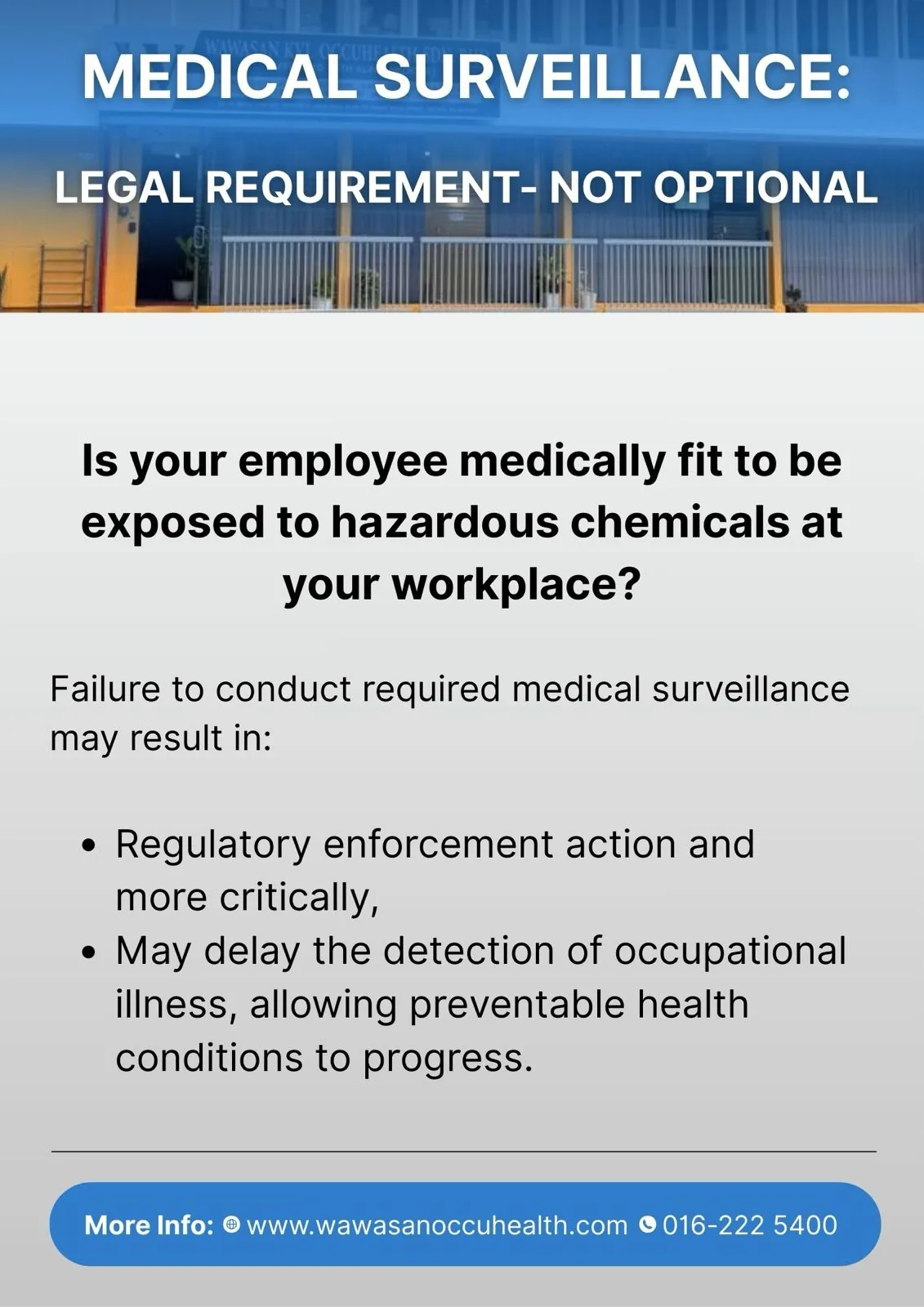
Medical Surveillance for Chemical Exposure
Employees exposed to chemicals hazardous to health may require health surveillance to identify adverse health effects associated with occupational exposure.
Under Malaysia’s USECHH Regulations 2000, health surveillance is required where the assessment indicates that it is necessary to protect exposed workers. For certain chemicals listed in Schedule II, medical surveillance is required at intervals of not more than 12 months, unless a shorter interval is determined by the OHD or appropriate medical practitioner.
What Does Medical Surveillance Aim to Achieve?
Medical surveillance can help to:
- Establish baseline health status
- Detect early adverse health effects related to chemical exposure
- Assess employees’ health in relation to occupational exposure
- Support timely medical intervention and follow-up
- Assess fitness to work with relevant chemicals
- Support compliance with statutory requirements
- Maintain appropriate health surveillance records
Why Is CHRA Important?
A Chemical Health Risk Assessment (CHRA) helps identify the health risks associated with chemicals used at the workplace and determines whether measures such as exposure monitoring and health surveillance are necessary.
Medical surveillance should therefore be part of a broader chemical risk management programme, rather than simply a routine medical check-up.
When Abnormal Findings Are Identified
Where medical surveillance identifies abnormal findings, the OHD may review the employee’s occupational exposure information and recommend appropriate investigation, follow-up or preventive measures.
Early identification allows potential occupational health problems to be addressed before they progress.
Key Takeaway
Medical surveillance should be driven by occupational health risk—not simply by a standard medical examination package.
Where health surveillance is required, employers should ensure that the appropriate programme is implemented and that the medical surveillance component is conducted by an Occupational Health Doctor.
At Wawasan KVL Occuhealth in Shah Alam, we provide occupational medical surveillance services to support employers in managing worker health in relation to workplace chemical exposure.