
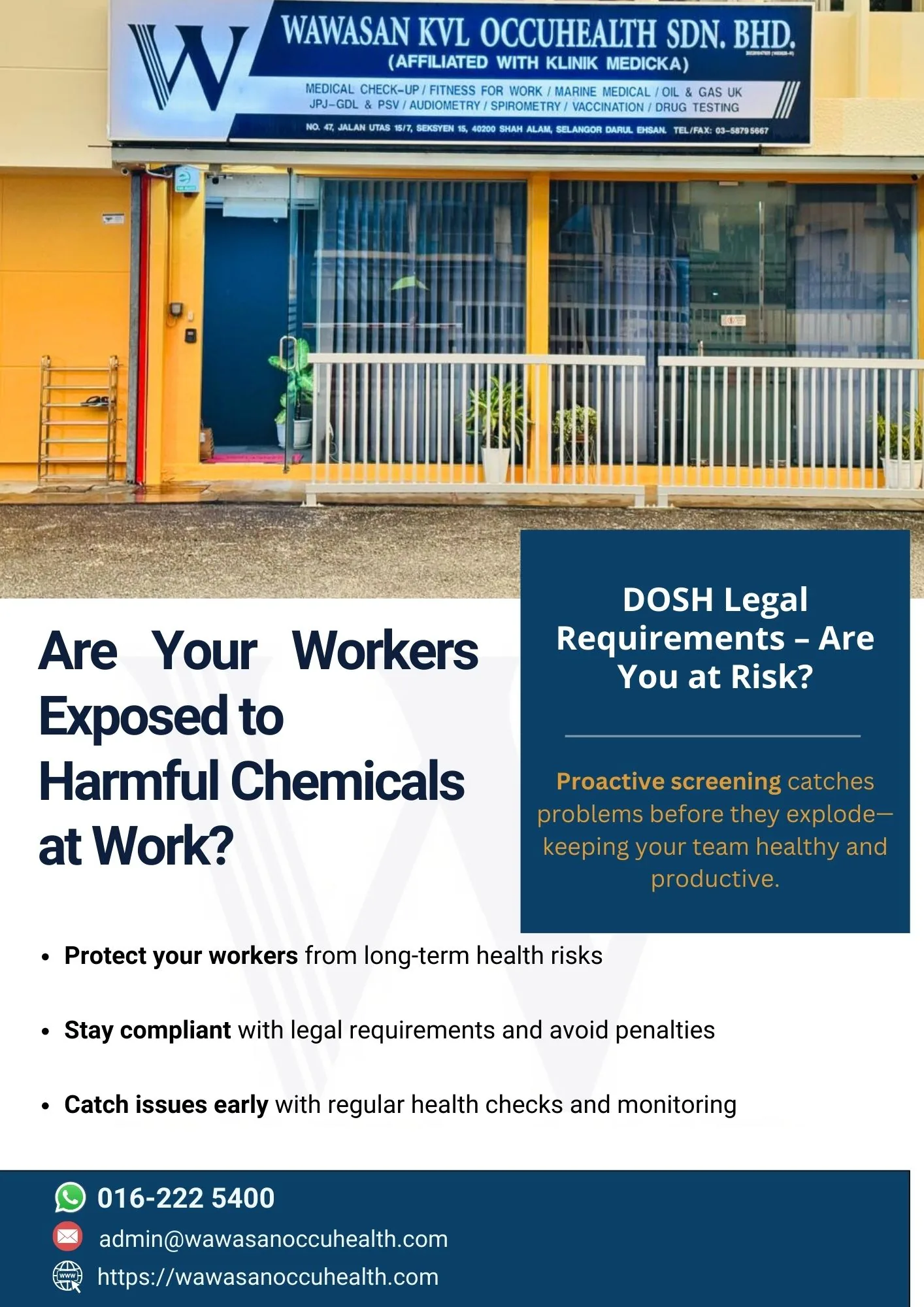
Medical Surveillance for Workers Exposed to Hazardous Chemicals
Workers who are exposed to chemicals hazardous to health may face health risks depending on the type of chemical, level of exposure and workplace controls.
Why is medical surveillance important?
Medical surveillance helps monitor a worker’s health in relation to workplace chemical exposure. It may help to:
- Establish a health baseline
- Detect possible health effects early
- Monitor changes over time
- Identify the need for further medical assessment
- Assess fitness to continue relevant work where necessary
For certain chemicals listed under Schedule II of the USECHH Regulations, medical surveillance may be required at intervals of not more than 12 months, unless a shorter interval is determined.
This is why employers should first consider the chemical exposure risks and CHRA findings, rather than simply sending every worker for the same medical examination.
What should employers review?
Employers should consider:
- Chemicals used at the workplace
- Potential worker exposure
- CHRA findings
- Existing control measures
- Whether health surveillance is required
- Appropriate surveillance intervals
Protecting workers through early monitoring
Workplace controls remain the main way to reduce chemical exposure. Where health surveillance is required, medical surveillance provides an additional way to monitor workers and identify possible health effects early.