
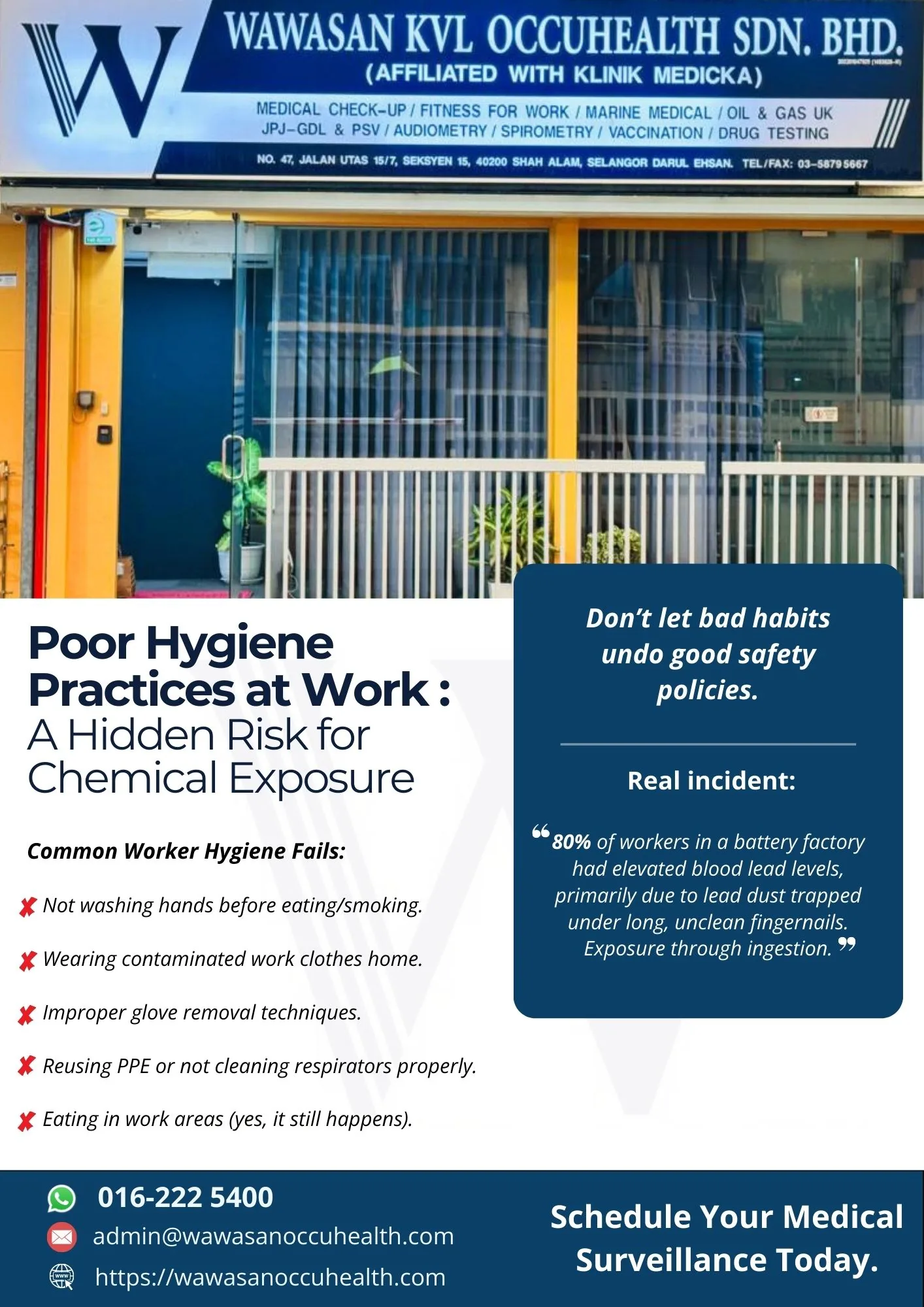
Poor Hygiene Practices at Work: A Hidden Risk for Chemical Exposure
A workplace case highlighted how poor hand hygiene and contaminated fingernails may contribute to lead exposure through ingestion.
Simple habits such as eating in contaminated areas, not washing hands before eating or smoking, taking contaminated clothing home, or handling PPE incorrectly can increase the chance of chemicals entering the body.
A Real Example: Lead Exposure
A study of workers exposed to lead found that lead levels on workers’ faces and fingernails were associated with blood lead levels. The findings suggested that contaminated hands and skin could contribute to lead entering the body through ingestion.
Common Hygiene Practices That Increase Risk
Workers should avoid:
- Eating or drinking in areas where chemicals are handled
- Smoking without washing hands first
- Taking contaminated work clothing home
- Removing gloves incorrectly
- Reusing contaminated PPE without proper cleaning
- Failing to wash hands and face after work
These practices may seem minor, but they can contribute to chemical exposure through inhalation, ingestion or contact with contaminated surfaces.
What Can Employers Do?
Employers should provide suitable facilities, clear hygiene procedures and appropriate PPE, while ensuring workers understand and follow safe work practices.
Good hygiene should work together with proper chemical risk assessment, engineering controls, safe work procedures and medical surveillance where required.
Key Takeaway
Chemical exposure does not only happen through breathing contaminated air. Poor hygiene can also create another route of exposure — particularly when contaminated hands, clothing or surfaces come into contact with food, cigarettes or the mouth.