
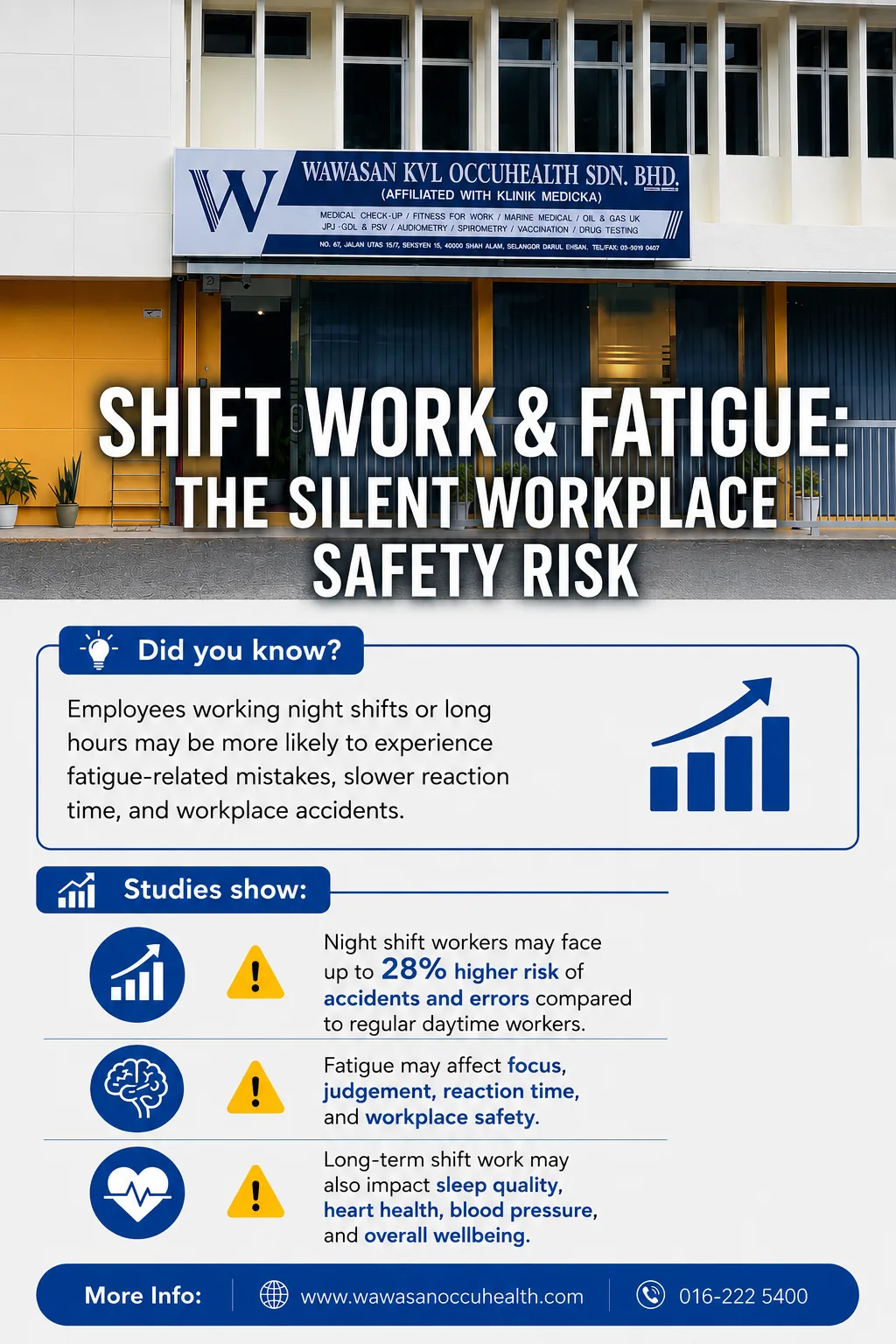
Shift Work and Fatigue: Understanding the Workplace Safety Risk
Shift work is essential in many industries that operate beyond conventional working hours. However, night work, rotating shifts and extended working hours can disrupt normal sleep patterns and circadian rhythms, increasing the risk of workplace fatigue.
Fatigue is more than simply feeling tired. It can affect alertness, concentration, reaction time, memory and judgement, which may have important implications for workplace safety, particularly in safety-sensitive work.
How Does Shift Work Contribute to Fatigue?
Fatigue can be influenced by several factors, including:
- Night or rotating shifts
- Extended working hours
- Insufficient sleep and recovery time
- Long periods of wakefulness
- Physically or mentally demanding work
- Repetitive or monotonous tasks
The risk is therefore not determined by shift work alone. Shift timing, duration, workload, rest periods and individual factors can all contribute to fatigue.
How Can Fatigue Affect Workplace Safety?
Fatigue may:
- Reduce attention and concentration
- Slow reaction time
- Affect judgement and decision-making
- Increase the likelihood of errors
- Reduce the ability to respond effectively to workplace hazards
These effects are particularly important where employees operate machinery, drive vehicles, work at heights or perform other safety-sensitive duties.
What Can Employers Do?
Fatigue management should consider both work organisation and individual health.
Employers can consider:
- Providing adequate rest and recovery between shifts
- Reviewing shift duration and rotation patterns
- Providing appropriate breaks during demanding work
- Managing workload and task demands
- Raising awareness of fatigue-related safety risks
- Encouraging employees to report significant fatigue concerns
When Should Medical Assessment Be Considered?
Fatigue can have many causes and should not automatically be attributed to shift work.
Where persistent fatigue affects an employee’s functioning or raises concerns about their ability to safely perform their duties, medical assessment may help identify underlying or contributing health factors.
Depending on the employee’s role and circumstances, a Fitness for Work Assessment may also be appropriate when there are concerns about the ability to safely perform safety-sensitive or physically demanding duties.
Key Takeaway
Fatigue is an important workplace safety concern. Managing shift patterns, workload and adequate rest can help reduce fatigue-related risks.