
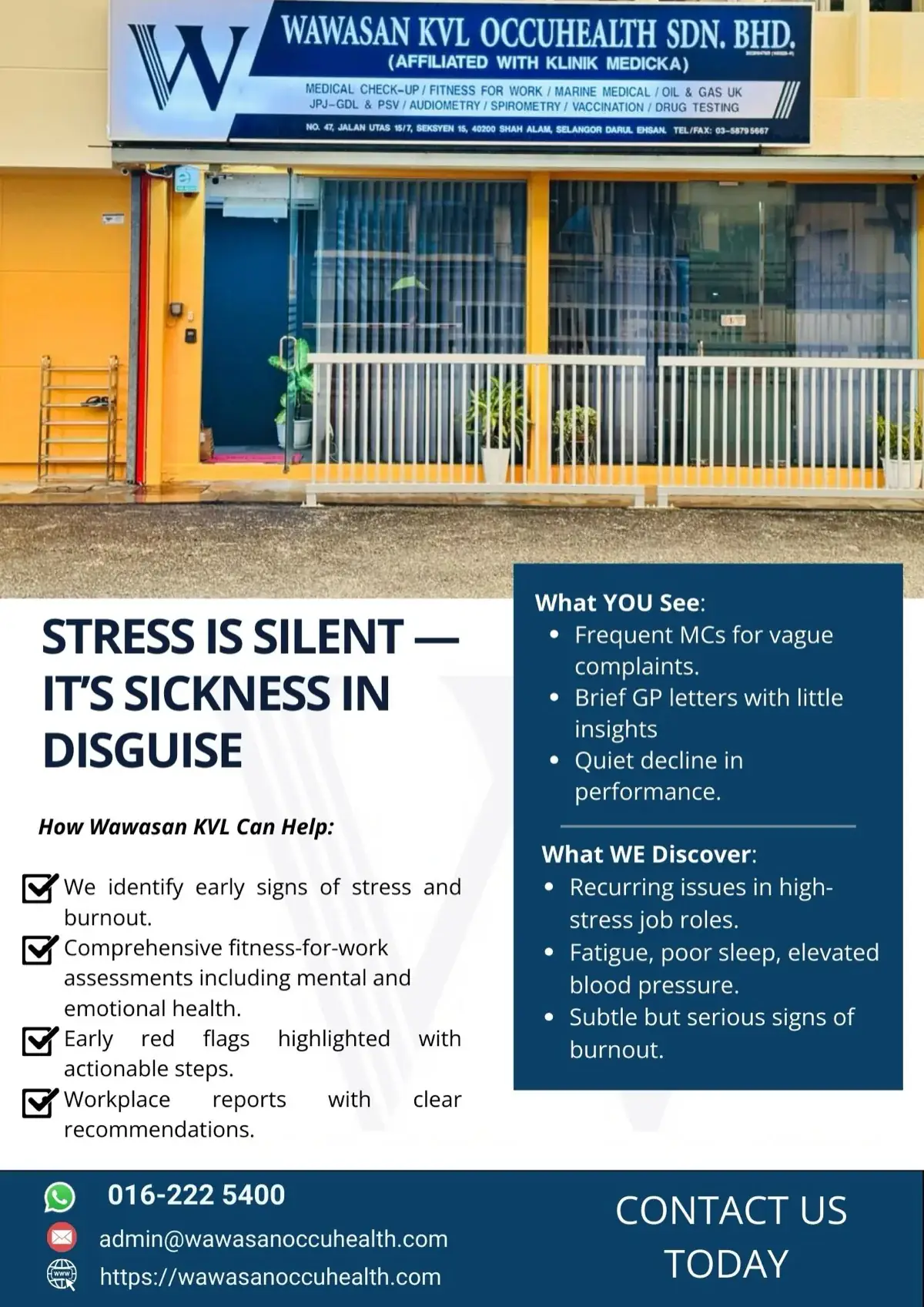
Workplace Stress, Mental Health and Burnout
Workplace stress can affect an employee’s mental and physical wellbeing, particularly when work demands become excessive or difficult to manage.
Work-related stress is influenced by how work is designed, organised and managed. Psychosocial risks may arise from excessive workload, long or unsocial working hours, lack of job control, unclear roles, poor support, workplace harassment and other organisational factors.
When does workplace stress become a concern?
Stress is not always harmful. However, prolonged or severe work-related stress can contribute to physical and psychological health problems.
DOSH’s PRisMA 2024 guideline notes that chronic stress may contribute to burnout, anxiety and depression. It describes burnout as a psychological syndrome characterised by exhaustion, cynicism and reduced professional efficacy.
Workplace stress may also affect concentration, work performance, attendance and overall functioning.
What should employers look for?
Potential indicators may include:
- Changes in work performance
- Increased absenteeism or presenteeism
- Persistent fatigue or difficulty concentrating
- Increased complaints or interpersonal difficulties
- Signs of excessive workload or work-related strain
- Other changes that may indicate psychosocial risks
These indicators should not automatically be interpreted as evidence of a mental health condition. They may have multiple causes and should be considered within the wider workplace context.
What can employers do?
A practical occupational health approach includes:
- Identifying psychosocial hazards and workplace stressors
- Assessing workload, work organisation and job demands
- Providing appropriate support and early intervention
- Addressing workplace factors that contribute to psychosocial risk
- Encouraging appropriate medical or professional assessment where indicated
- Supporting workers experiencing mental health difficulties
The WHO recommends organisational interventions that assess and modify workplace conditions to prevent and manage risks to mental health.
Key takeaway
Workplace stress should not be dismissed simply because an employee remains at work.
Understanding the difference between normal work-related pressure, harmful stress, burnout and mental health conditions allows employers to respond appropriately rather than assuming every change in attendance or performance is a medical problem.
Where concerns about an employee’s health or ability to perform their duties arise, an appropriate occupational health assessment may help support safe and appropriate work decisions.